
 By Shaquille Barrett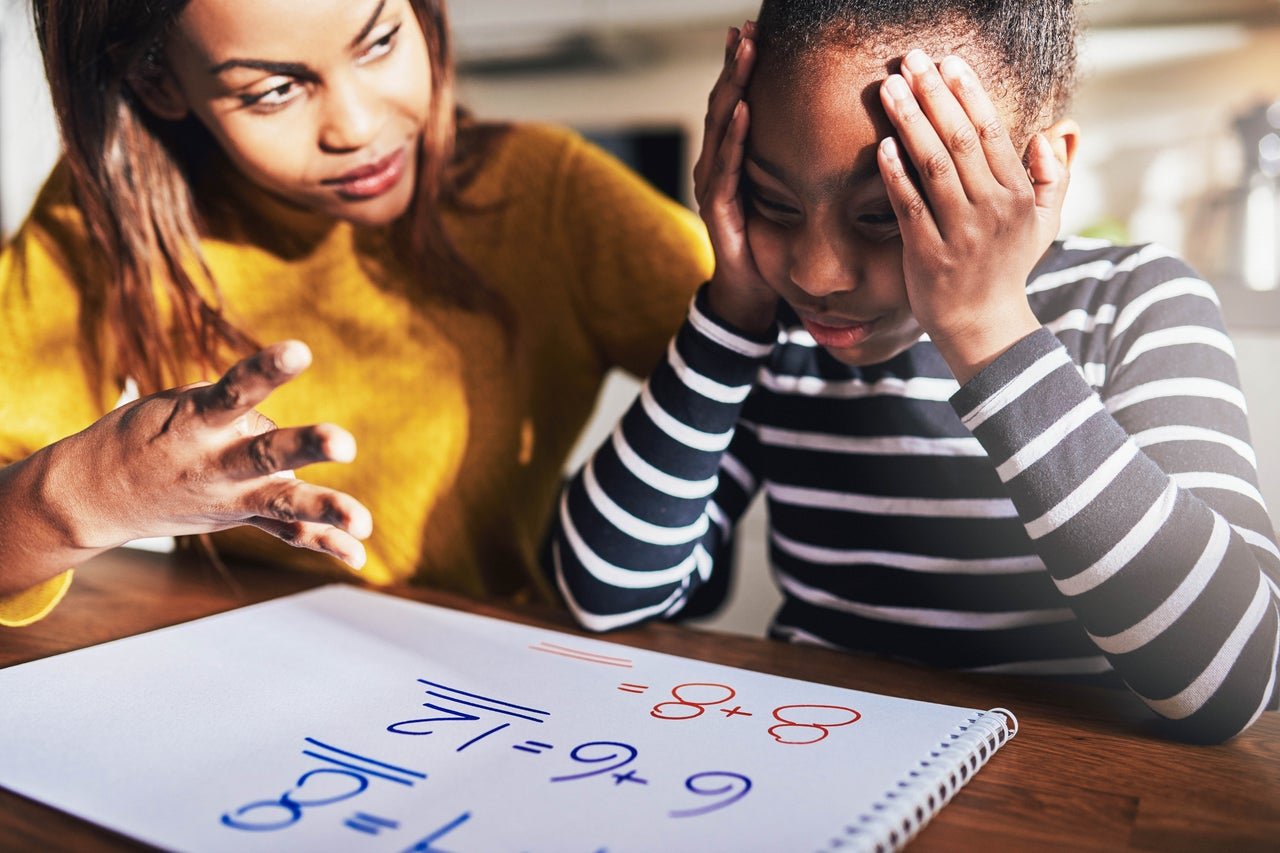
On a Wednesday afternoon, the bell had rung, but one student lingered in the doorway, homework notebook in hand. She hesitated, then asked, “Miss, does it matter if I just write the answers? My mother say she can’t help me with this topic.” The class had been working on quadratic equations, and the page before her was mostly blank. There was no complaint in her voice—just a kind of quiet resignation, as if she’d already learned that some help would not be coming.
This is not an unfamiliar scene. As students move from primary to secondary school, something subtle happens in the background. At first, parents attend meetings, check homework, ask after tests. But somewhere between the first and third form, the pattern shifts. Parental presence recedes, and for many students, schoolwork becomes a solitary affair. The textbooks and exercise books are carried home, but they are often closed until the next class. Assignments pile up, not out of protest, but because there is no one at home who expects to see them. In our classrooms, the evidence shows up in missing homework, incomplete notes, and revision that is more intention than reality.
There is a pattern here. Once students enter secondary school, many parents feel less equipped or less obligated to remain actively involved in their children’s learning. The assumption seems to be that older children, now dressed in bigger uniforms and carrying heavier bags, are ready to carry the full weight of their education alone.
It’s a quiet assumption, rarely stated outright, but it shapes the landscape of secondary education. The belief is that maturity and independence are natural by-products of age and grade level. Secondary school, in this view, is the proving ground for self-driven learners, and parental oversight is seen as unnecessary—or even unhelpful—interference. The child who once read aloud at the kitchen table is now expected to manage deadlines, organize notes, and self-motivate, all with minimal guidance.
But does this assumption hold up to what we see in practice? The reality is more complicated. Adolescence is a time of shifting priorities, social distractions, and growing academic complexity. Many students do not yet have the tools to manage these demands independently. The classroom evidence is not subtle: notes are left unfinished, homework is done in a rush (or not at all), and content is rarely reviewed outside of the classroom setting. When asked, students often admit there is no one at home who expects to see their work. The accountability that once existed quietly dissolves, and school becomes something that happens mostly between 8:00 and 3:00.
Of course, there is a reasonable counterpoint. Secondary school content can be daunting for parents. Many did not study these subjects themselves, or it has been decades since they last encountered algebra, chemistry, or Shakespeare. There is a certain vulnerability in admitting, even to one’s own child, “I can’t help you with this.” For some, it feels safer to step back than to risk embarrassment or frustration. And with workdays growing longer and resources stretched thin, involvement can feel like one responsibility too many. The intention is not neglect, but self-preservation—a quiet calculation about where energy is best spent.
Yet, when we zoom out, a larger system comes into focus. Parental withdrawal is not just about individual comfort or capacity; it is also about the invisible structures that shape our expectations. Schools often operate on the premise that home support will taper off, and so they design accountability systems that assume students will self-regulate. At the same time, there are cultural messages—sometimes subtle, sometimes direct—that secondary students should “know better” and “take responsibility.” The result is a kind of institutional drift, where the handover from home to school is not negotiated, but simply assumed. No one quite says, “You’re on your own now,” but the message arrives all the same.
There are consequences to this drift. Without someone at home to answer to, many students do not develop the habits that underpin genuine learning. The habit of reviewing notes, the discipline of finishing assignments with care, the simple act of reading for understanding—these are not automatic, and they do not always emerge from classroom routines alone. When home and school each expect the other to set the standard, the standard itself becomes indistinct. Students, caught in the gap, often float between expectations, doing just enough to avoid trouble but rarely enough to build real mastery.
It is tempting, then, to look for a simple fix, to urge parents to “get involved” or for schools to “do more.” But such calls rarely account for the complexity of family life, the realities of work, or the uneven distribution of educational capital across households. Nor do they address the deeper cultural scripts about independence and maturity that shape our collective approach to secondary education. The truth is that learning, especially in adolescence, is still a collective effort—one that relies on overlapping layers of accountability, encouragement, and care. When any layer quietly disappears, the effects ripple outward in ways that are easy to miss, until they are not.
Perhaps the more useful question is not, “How do we get parents more involved?” but rather, “What do we lose when the expectation of involvement fades?” If we imagine the home as a silent partner in the work of learning, what happens when that partnership is dissolved by default, not by decision? The answer, as always, is visible in the small, unfinished details of student life—the notebook left blank, the homework undone, the confidence to try quietly eroding.
In the end, the shift from primary to secondary school is not just a change in curriculum, but a change in the subtle architecture of responsibility. The question that lingers is not whether parents should step back, but what happens to learning when no one is watching closely enough to notice the drift.